
Balancing work and life is a common struggle in the finance industry. Achieving a healthy work-life balance can prove to be a daunting endeavor, given the fast-paced nature of the industry, the extended working hours, and the constant high-pressure situations. However, finding a balance between work and life is significant for both personal and professional success. Let’s look into strategies for balancing work and life in the finance industry and the benefits of achieving a healthy work-life balance.
Understanding Work-Life Balance in the Finance Industry
The finance industry is notorious for its long hours and high-pressure environment. Professionals in the industry often work long days and weekends, leaving little time for personal interests and family. Maintaining a harmonious balance between work and personal life is important for achieving both personal and professional success. It enables individuals to have a fulfilling personal life while excelling in their professional careers.
Strategies to Achieve Work-Life Balance in the Finance Industry
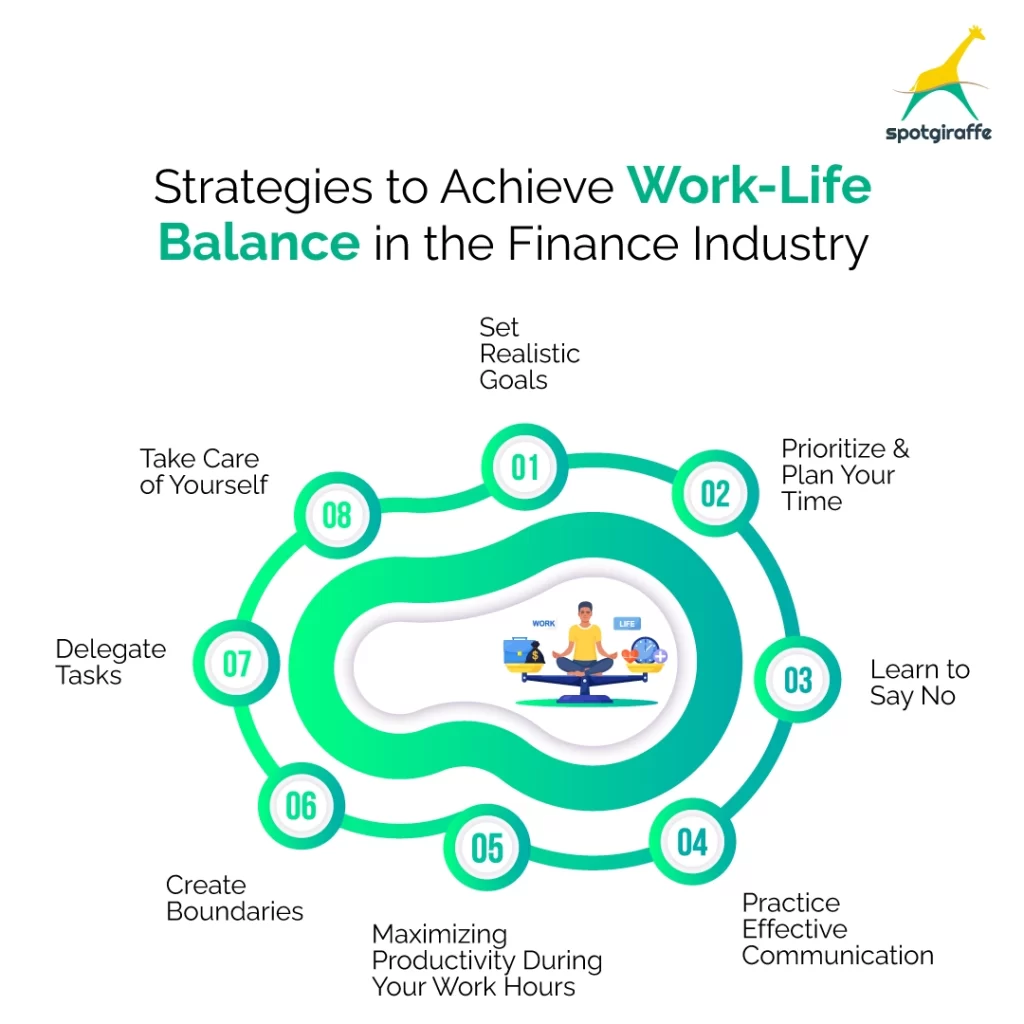
- Set Realistic Goals
Setting realistic goals is the initial step to achieving a healthy work-life balance. Prioritizing tasks and creating a plan for personal and professional commitments is essential. Setting achievable goals helps to avoid burnout and feelings of frustration.
- Prioritize and Plan Your Time
Prioritizing and planning your time is crucial to achieving a healthy work-life balance. It is necessary to make time for both personal and professional commitments. Creating a schedule that outlines your daily tasks can help you manage your time effectively.
- Practice Effective Communication
Effective communication is crucial to achieving a healthy work-life balance. Communicating your needs and expectations with your colleagues and family is essential. This approach will empower you to efficiently manage your time and responsibilities.
- Learn to Say No
Learning to say no is crucial in the finance industry. Professionals often face competing demands on their time, and setting boundaries and prioritizing tasks is essential. Being willing to decline commitments that don’t match your objectives and principles can support you in attaining a well-balanced lifestyle between your work and personal life.
- Take Care of Yourself
Taking care of yourself is significant to achieving a healthy work-life balance. Prioritizing self-care activities, exercise, eating healthy, and getting enough sleep is essential. These activities can help you recharge and avoid burnout.
- Create Boundaries
Creating boundaries is crucial to achieving a healthy work-life balance. It is essential to set limits on work hours and protect personal time. One way to achieve this is by allocating dedicated time slots for personal activities and consciously refraining from work-related tasks during those periods.
- Delegate Tasks
Delegating tasks is crucial to achieving a healthy work-life balance. Delegating tasks can aid you in managing your time and reduce overwhelming feelings. Identifying tasks that can be delegated to colleagues or family members is essential.
- Maximizing Productivity During Your Work Hours
Utilizing the most of your time at work is crucial to achieving a healthy work-life balance. Focusing on the most critical tasks and avoiding distractions such as social media and emails is essential. This strategy can aid in efficient time management, thereby minimizing the necessity for overtime work.
The Benefits of a Balanced Work-Life
Balancing work and life is essential for a healthy and fulfilling career in the finance industry. Managing a work-life balance can be challenging, especially when you are working long hours and have a demanding job. However, there are numerous benefits to achieving this balance, both in terms of your personal well-being and your professional success.
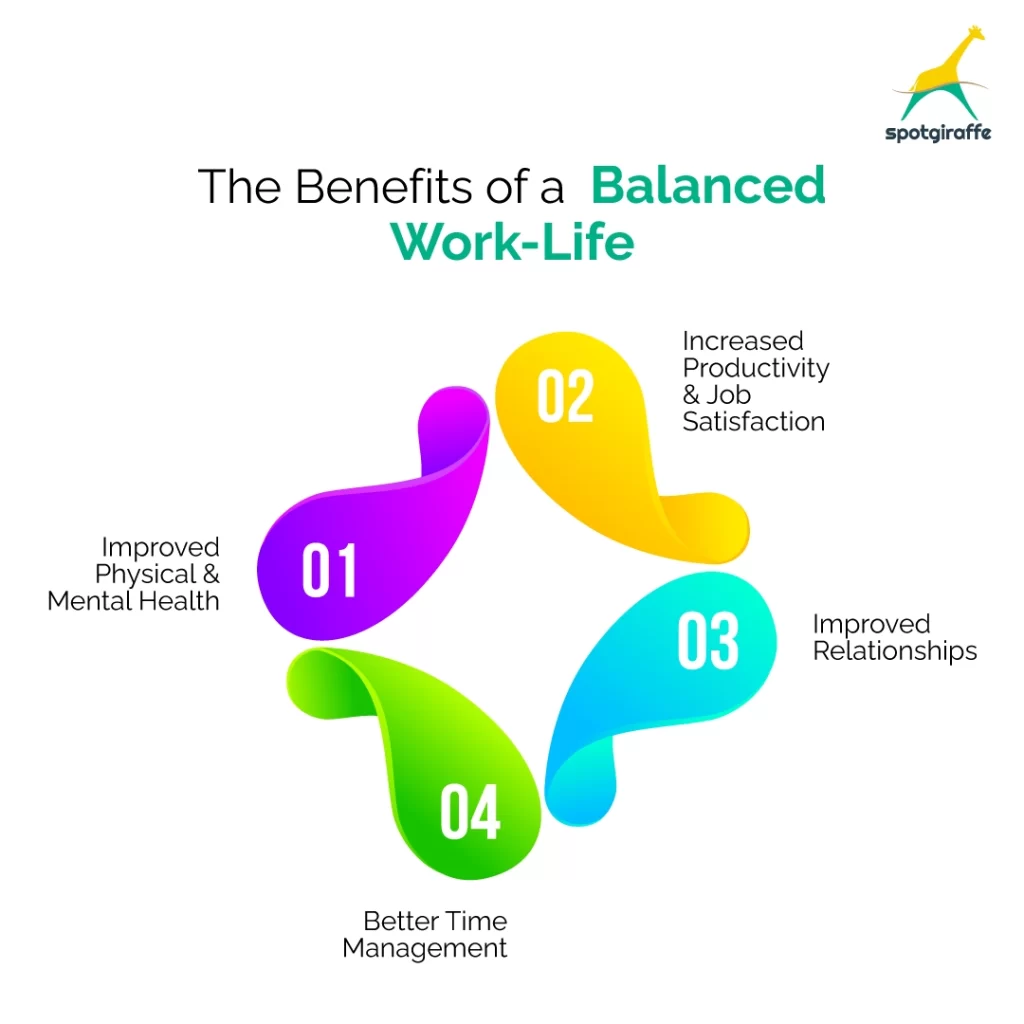
- Improved Physical and Mental Health
Maintaining a work-life balance can aid in reducing stress, which can significantly impact both physical and mental health. Persistent stress can contribute to a range of health issues, including heart disease, high blood pressure, and mental health conditions such as anxiety and depression. Enhancing your overall well-being and health is achievable by implementing effective stress reduction measures, such as engaging in regular exercise, dedicating quality time to loved ones, and pursuing hobbies beyond the confines of work.
- Increased Productivity and Job Satisfaction
When you have a better balance between work and personal life, you will likely be more productive and satisfied with your job. When you feel rested and relaxed, you can enhance your focus on your work and be more productive during work hours. Additionally, having time for hobbies and other interests outside of work can provide a sense of fulfilment and purpose, translating into increased job satisfaction.
- Improved Relationships
Maintaining a work-life balance can also improve your relationships with family, friends, and colleagues. When you have more time for social activities and personal connections, you can strengthen your relationships and develop a support system to help you handle stress and maintain a positive outlook.
- Better Time Management
Balancing work and life requires effective time management skills. By prioritizing your time and focusing on the most critical tasks at work, you can maximize your productivity and reduce your time on less important tasks. This can free up more time for personal pursuits and help you better balance your work and personal life.
Achieving a work-life balance is crucial for success in the finance industry. One can improve health, increase productivity and job satisfaction, and build stronger relationships by prioritizing personal well-being and effective time management. With fair strategies and mindset, it is indeed possible to have a fulfilling career while simultaneously upholding a healthy work-life balance.
The finance industry offers various job opportunities, so if you’re an expert in the sector and have ideas for managing work-life balance, don’t delay finding the right fit for you. You can approach the best finance job portals, like SpotGiraffe, one of the top finance job portals in Kerala, to find suitable jobs in the industry. Whether you want to become an accountant, auditor, finance analyst, senior accountant, or audit assistant, you can find the right job at SpotGiraffe. If you have a better strategy for balancing work and life and find the right firm, you can build a positive career in your dream journey.
FAQ
- How can I achieve a work-life balance in the finance industry?
Achieving a work-life balance in the finance industry requires effective time management, clear communication with your employer and colleagues, and a commitment to prioritizing your personal life outside of work. It can be useful to set clear boundaries around your work hours and establish a routine that allows for time outside work for hobbies, exercise, and social activities.
- Is it possible to gain a work-life balance in a demanding finance job?
Yes, it is possible to gain a work-life balance in a demanding finance job. It requires commitment and effort, but by prioritizing your personal life and effectively managing your time, you can create a fulfilling career while still maintaining a healthy work-life balance.
- What are the consequences of not achieving a work-life balance?
Not achieving a work-life balance can lead to burnout, stress, and a range of physical and mental health problems. It can also effect your relationships with family and friends and reduce your overall job satisfaction and productivity.